


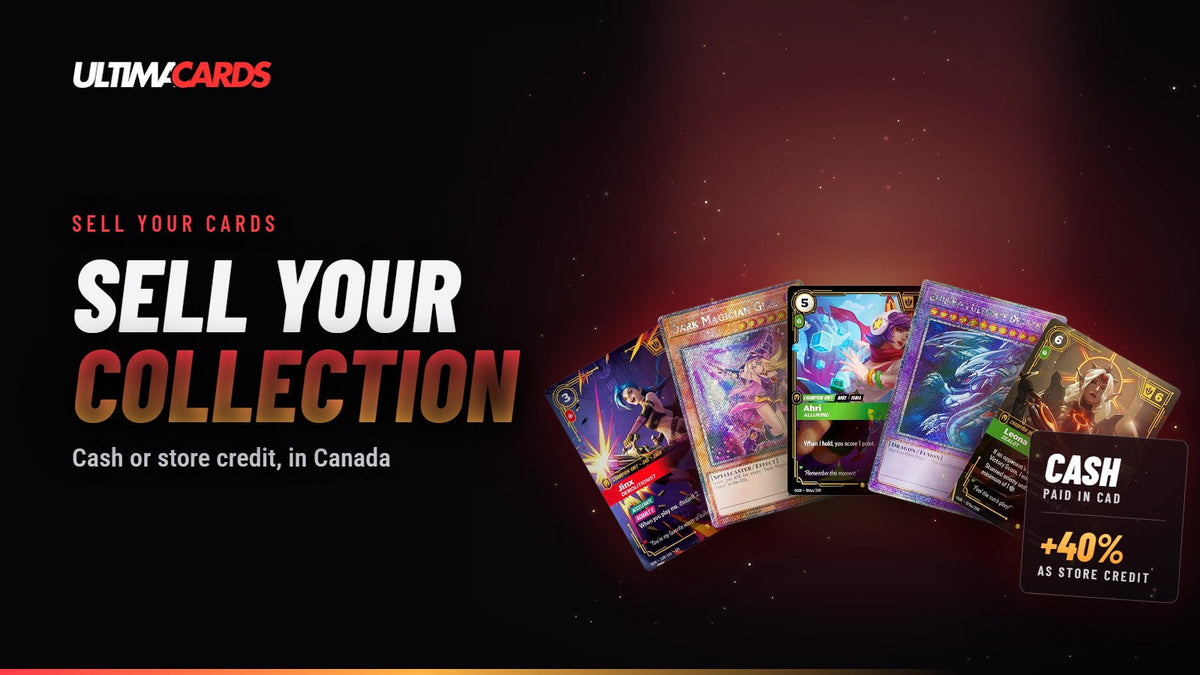
If you want to sell trading cards in Canada, you have more options than ever and more ways to lose money doing it. Selling to a store is fast but pays less than market price. Selling direct can pay more but costs time, fees, shipping risk and the occasional scammer. This guide compares every route, shows how to price and prepare a collection so you're paid fairly, and covers safe payment. It focuses on Yu-Gi-Oh! and Riftbound singles, but the method works for any game.
Ways to sell trading cards in Canada
| Route | Speed | What you keep | Effort | Risk |
|---|---|---|---|---|
| Online store buylist | Fast | Below market price, no fees | Low: ship once | Low |
| Local game store | Immediate | Below market price, often better in credit | Low | Low |
| Online marketplaces (eBay and others) | Slow | Market price minus fees and shipping | High: listing, photos, shipping each sale | Medium: returns, disputes |
| Local listings (Facebook Marketplace, Kijiji) | Varies | Close to market, no fees | Medium: messages, meetups | Medium: no-shows, scams |
| Live-selling apps and consignment | Varies | Market price minus fees or commission | Medium | Low to medium |
There's no single best route. Most collectors sell high-value cards individually and sell everything else in one batch to a store, where the convenience is worth more than the small difference per card.
Step 1: Sort and identify what you have
Before you price anything, separate the collection:
- Bulk: Commons and low-value cards. Individually they're worth very little, and many stores, including ours, don't buy bulk.
- Playables: competitive staples people actually use.
- Chase and vintage: high rarities, early 1st Editions, alt arts, overnumbered and signature cards.
- Graded: slabs from PSA, TAG, CGC and others.
For each card worth pricing, note the set code, rarity, edition and condition. That's what buyers price on. Our guides cover this in detail: how to price Yu-Gi-Oh! cards, Yu-Gi-Oh! card condition, and Riftbound rarities and overnumbered and signature cards.
Step 2: Price from sold listings
Asking prices tell you nothing. Look up what the exact printing sold for recently (TCGplayer's market price, eBay's "Sold items" filter), then convert US dollars to Canadian dollars. Be honest about condition: the gap between Near Mint and Lightly Played is real money.
Step 3: Choose how to sell
Selling to a store buylist
A buylist is the list of cards a store will buy and what it pays. You see offers up front, ship once, and get paid after the store checks condition. Stores pay below market price because they take on inspection, listing, storage and resale, but you skip fees, listing time, buyer messages and returns.
Selling to Ultima Cards:
- Search our buylist and add the cards you're selling. Every card shows its cash and credit price up front.
- Sleeve and toploader each card, pack it securely and ship it to us. Our guide to shipping trading cards shows how.
- We confirm each card's condition, and tell you before paying if a price changes. You can have any adjusted card returned at your expense.
- Get paid in cash by PayPal or Interac e-Transfer in CAD, or take 40% more as store credit or an Ultima Cards gift card.
- We accept Near Mint and Lightly Played singles. We don't take bulk. If a card isn't on the buylist, email sales@ultimacards.ca with a list.
Right now we most want Riftbound alt arts, overnumbered and signature cards, champion legends and competitive playables, plus Yu-Gi-Oh! meta staples and collector chase cards (Starlight, Quarter Century, Ghost and Collector's Rares). Start at Sell Your Collection.
Credit vs. cash: if you'll buy cards anyway, credit is usually the better deal. A $100 cash offer becomes $140 in credit, which you can spend on Yu-Gi-Oh! singles, Riftbound singles or graded cards.
Selling at a local game store
Walk-in trade-ins are immediate and you can meet the buyer face to face. Offers and credit bonuses vary from store to store. Call ahead to ask what they're buying and when the buyer is in.
Selling on marketplaces
You'll get closer to market price, but subtract:
- Selling fees charged by the platform
- Shipping and supplies, plus tracking for anything valuable
- Your time: photos, listings, messages and trips to the post office
- Risk: returns, "item not as described" claims and lost packages
This route makes the most sense for individual high-value cards where the extra percentage is worth real dollars.
Selling locally
Facebook Marketplace and Kijiji avoid platform fees, but expect lowball offers, no-shows and the occasional scam. Meet in a public place (many police stations offer safe exchange zones), bring a friend, and check cards together before money changes hands.
Getting paid safely
- Never ship before payment clears. Confirm the money is in your account, not just a screenshot.
- Know your payment method. PayPal Goods and Services offers buyer and seller protections; Friends and Family doesn't. Interac e-Transfers are hard to reverse once deposited, which protects you as the seller.
- Watch for overpayment scams. A buyer who "accidentally" sends too much and asks for a refund of the difference is a classic scam.
- Use tracking on anything valuable, so you can prove delivery.
- Photograph cards front and back before shipping, so you can show their condition if there's a dispute.
- Keep messages on the platform where possible, because that's where the platform's protection applies.
Getting more for your collection
- Sell playables before a reprint or rotation, not after. Staple prices move with each banlist and set release.
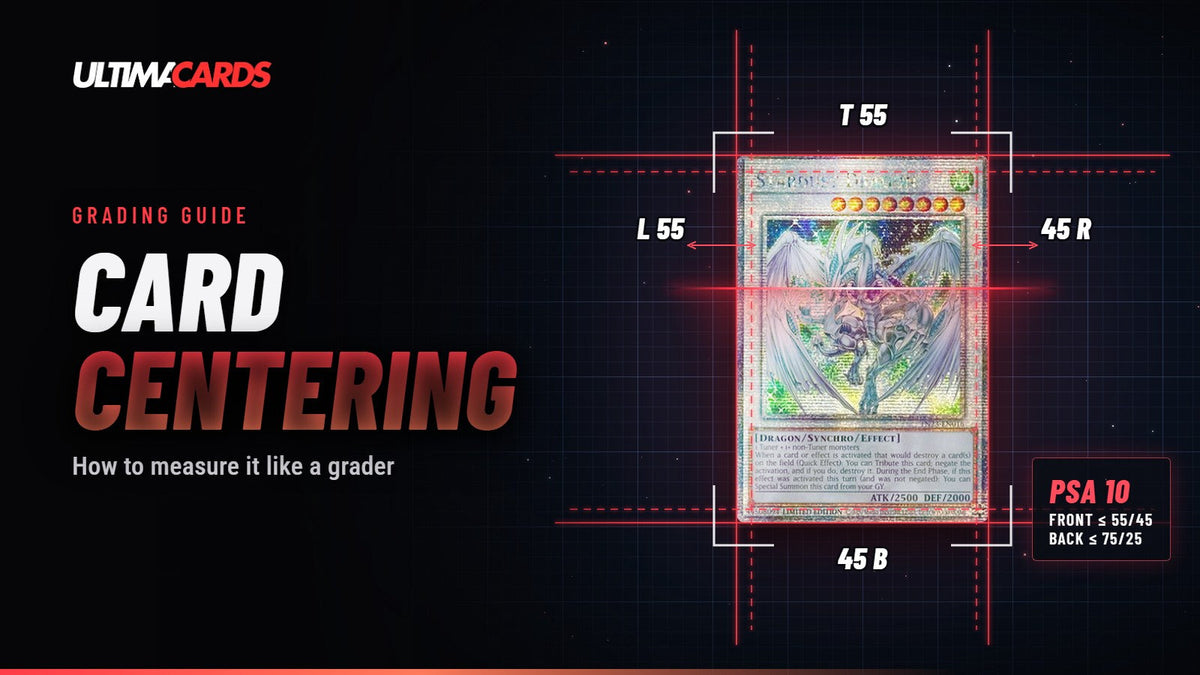
- Grade selectively. Grading can add value to vintage and high-rarity cards in top condition, but it costs money and time. Check centering first, then read our Yu-Gi-Oh! or Riftbound grading guides.
- Present cards well. Clean sleeves, sharp photos and accurate condition notes get better offers and fewer disputes.
- Sell sets together. Matching sets, such as all five Exodia pieces from the same printing, can be worth more than the parts. See our Exodia guide.
A note on taxes
Occasionally selling part of a personal collection is different from buying and selling cards regularly to make a profit. If you're doing the latter, the CRA may treat it as business income. If you're unsure, talk to an accountant.
Frequently asked questions
Where can I sell trading cards in Canada?
Store buylists (online or local), online marketplaces, local listings such as Facebook Marketplace and Kijiji, and live-selling apps. Ultima Cards buys Yu-Gi-Oh! and Riftbound singles through our buylist.
Why do stores pay less than market price?
A store's offer covers inspection, listing, storage and the risk of reselling. In exchange you get a fast, certain payment with no fees or returns to deal with.
Is store credit worth more than cash?
At Ultima Cards, credit is worth 40% more than the cash offer, so it's the better deal if you plan to buy cards from us anyway.
Do you buy bulk cards?
Not at this time. We buy Near Mint and Lightly Played singles on our buylist. For cards that aren't listed, email sales@ultimacards.ca.
How do I ship cards to sell them?
Penny sleeve and toploader for each card, a cardboard sandwich, a padded mailer or small box, and tracking for anything valuable. Our shipping guide covers each step.

Leave a comment
This site is protected by hCaptcha and the hCaptcha Privacy Policy and Terms of Service apply.