


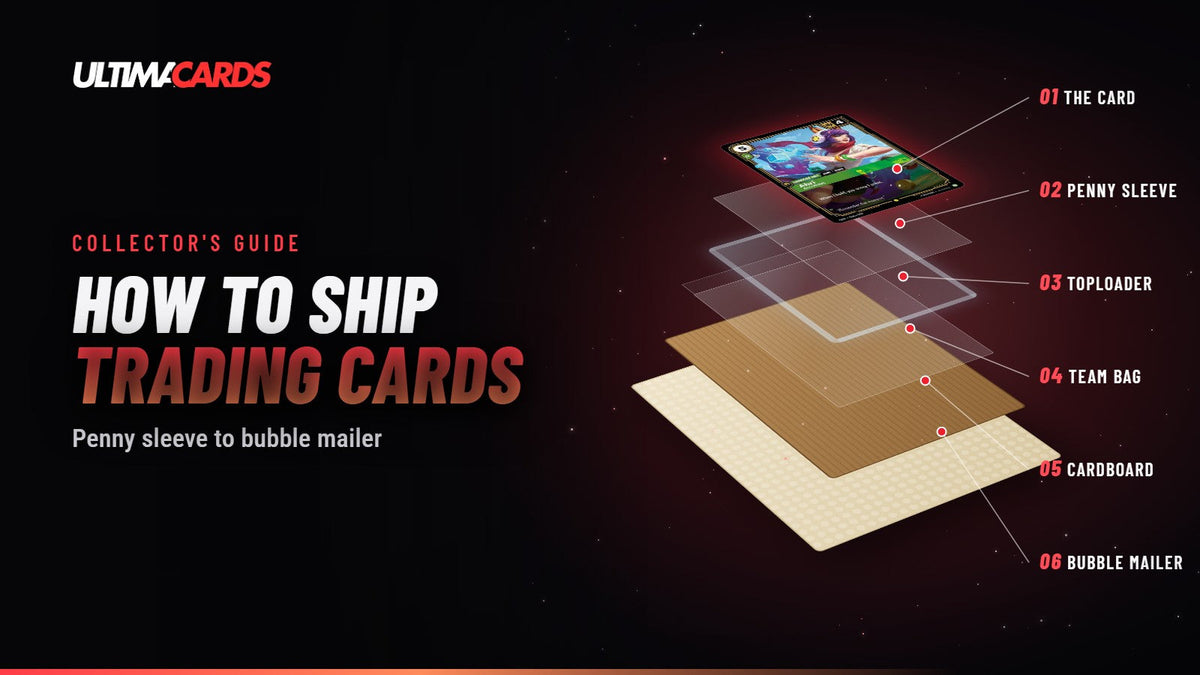
Knowing how to ship trading cards properly is the difference between a happy buyer and a bent card, a dispute and a lost sale. The good news: the method is cheap and takes two minutes once you have the supplies. This guide covers the packing stack that works for single cards, when untracked Lettermail is fine and when it isn't, how to ship graded slabs, and how to pack a grading submission. Canada Post details are current as of October 2026; check their site for today's rates.
What you need
| Supply | Why |
|---|---|
| Penny sleeves | Soft first layer against scratches and dust |
| Toploaders (35pt for most single cards) | Rigid protection against bends |
| Team bags (resealable) | Seal the toploader so the card can't slide out |
| Painter's tape | Low-tack tape that peels off without residue |
| Cardboard | Stiffens the package so the mail sorting machines can't bend it |
| Bubble mailers or rigid mailers | Outer protection |
| Small boxes and bubble wrap | For slabs and larger orders |
Browse sleeves and accessories if you're stocking up.
How to pack a single card: the six-layer stack
- The card. Handle it by the edges, with dry hands.
- Penny sleeve. Slide the card in top first. For Yu-Gi-Oh! cards, which are smaller than standard, use a small perfect-fit sleeve first so the card doesn't slide around inside a standard penny sleeve.
- Toploader. Insert the sleeved card into the toploader. It should fit without force.
- Team bag (or painter's tape across the opening). This stops the card sliding out. Never put tape directly on a card or sleeve.
- Cardboard sandwich. Place the toploader between two pieces of cardboard slightly larger than it, and tape the cardboard edges together. This is the step most people skip, and it's what stops bends.
- Mailer. Put the sandwich in a bubble mailer or rigid mailer, with a little padding so it can't shift.
For multiple cards, put each card in its own penny sleeve, then group a few in a toploader only if they fit loosely, or use one toploader per card for anything valuable.
Lettermail, Registered Mail or a parcel?
Lettermail (untracked)
Canada Post Lettermail is the cheapest way to send a card or two, often called a PWE (plain white envelope). It has no tracking and no insurance. Size limits matter:
| Lettermail type | Max size | Max weight |
|---|---|---|
| Standard | 245 × 156 mm, 5 mm thick | 50 g |
| Non-standard and oversize | 380 × 270 mm, 20 mm thick | 500 g |
A toploader in a cardboard sandwich is usually thicker than 5 mm, so it typically goes at the non-standard or oversize rate. Weigh and measure before you stamp it. Use Lettermail only for low-value cards where you and the buyer accept the risk.
Registered Mail
Registered Mail adds tracking, a delivery signature and, for domestic items, automatic liability coverage of up to $100, on top of Lettermail postage. It's a good middle ground for mid-value cards in a flat envelope.
Parcel services (tracked)
Canada Post's parcel services, and other couriers, include tracking and some liability coverage, with more available to buy. Use a tracked parcel for:
- Any card worth more than you'd be comfortable losing
- Graded slabs
- Multiple valuable cards in one package
How coverage pays out: Canada Post compensates at the lowest of the item's value, the coverage you bought, or the coverage included with the service. Buy enough coverage for what's inside, and keep proof of value.
Shipping graded cards (slabs)
Slabs are rigid, but they crack and scratch. Pack them like this:
- Put the slab in a slab sleeve or a protective case such as a GradedGuard case.
- Wrap it in bubble wrap, tape the wrap closed, and avoid tape on the slab itself.
- Pack it in a small box, not a mailer, with enough padding that nothing moves when you shake it.
- Ship tracked, with coverage that matches the slab's value.
Browse PSA graded cards to see how slabs should look when they arrive.
Shipping cards to a grading company
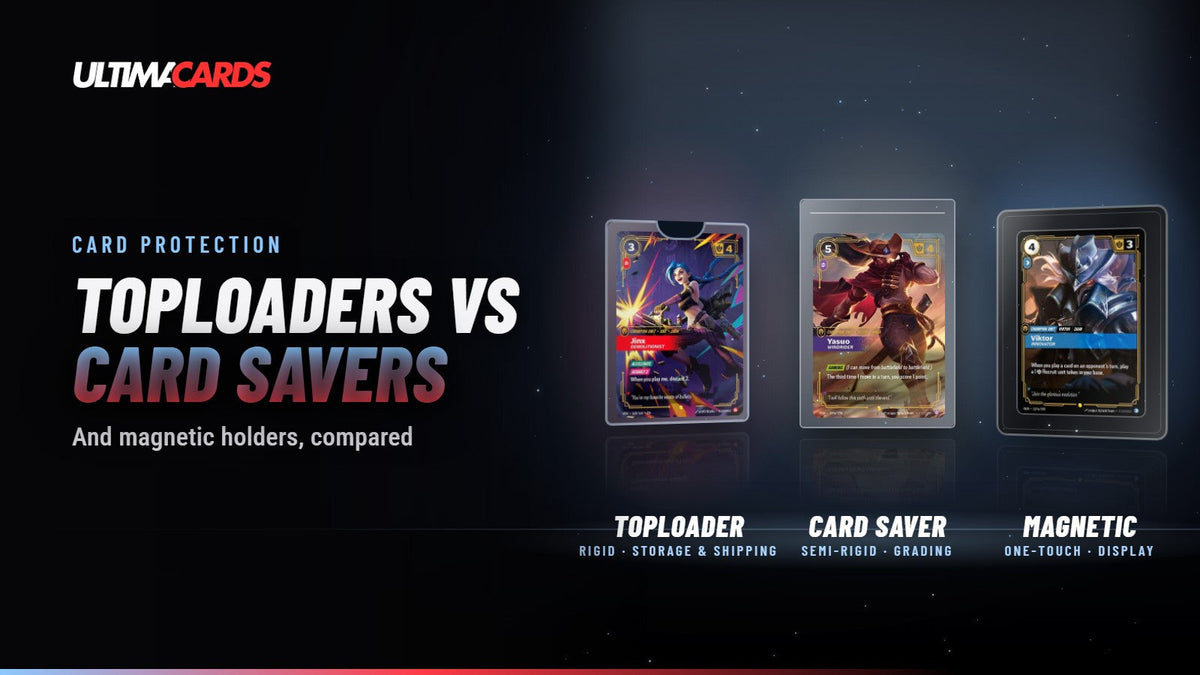
Grading companies have their own packing rules, and they're strict. PSA, for example, asks for each card in a penny sleeve and then a semi-rigid holder (3 5/16" × 4 7/8"), not a toploader, packed between pieces of cardboard secured with rubber bands, in a sturdy box. Cards should be packed in the same order as your submission form. Always check the grader's current shipping guide before you send anything. Our guide to toploaders vs. card savers explains the difference.
Grading guides for each game: Yu-Gi-Oh! grading and Riftbound grading.
Shipping to the US or overseas
International mail needs a customs declaration with an honest description and value. Under-declaring to save the buyer duties is a bad idea: it can cause delays and limits your coverage if the package is lost. For valuable cards, use a tracked international service.
Common mistakes that damage cards
- Rubber bands directly on cards or toploaders. They dent edges. Use them only around cardboard, as graders instruct.
- Tape on the card sleeve. It can lift foil and leave residue.
- Toploaders loose in an envelope. Without cardboard, sorting machines can bend the whole package.
- Overstuffed toploaders. Forcing several cards into one toploader causes edge wear.
- No tracking on expensive cards. If something goes wrong, you have no proof of delivery.
- Cold, damp packages opened immediately. In winter, let the package warm up before opening to avoid condensation on foils.
How Ultima Cards ships your order
Canadian orders of $250 CAD or more ship free with tracking. For small singles-only orders (up to 45 cards with a singles subtotal of $30 or less), Canada Post Letter Mail is offered at checkout as an affordable option, with no tracking or insurance. Sealed products, graded cards and accessories always ship as parcels.
Frequently asked questions
What's the safest way to ship one trading card?
Penny sleeve, toploader, team bag or painter's tape over the opening, a cardboard sandwich, then a bubble mailer. Use tracking if the card is valuable.
Can I send a trading card in a regular envelope?
You can send a low-value card by Lettermail, but there's no tracking or insurance. A card in a toploader usually exceeds the 5 mm standard limit, so it's typically charged at the non-standard or oversize rate.
Should I use toploaders or card savers for shipping?
Toploaders are best for everyday shipping. Card savers (semi-rigid holders) are what grading companies like PSA ask for in submissions.
How do I ship graded cards?
Sleeve or case the slab, wrap it in bubble wrap, pack it in a small box with padding, and ship tracked with enough coverage for its value.
Is it worth paying for tracking?
For anything you couldn't afford to lose, yes. Tracking is your proof of delivery if a buyer says a package never arrived.

Leave a comment
This site is protected by hCaptcha and the hCaptcha Privacy Policy and Terms of Service apply.