


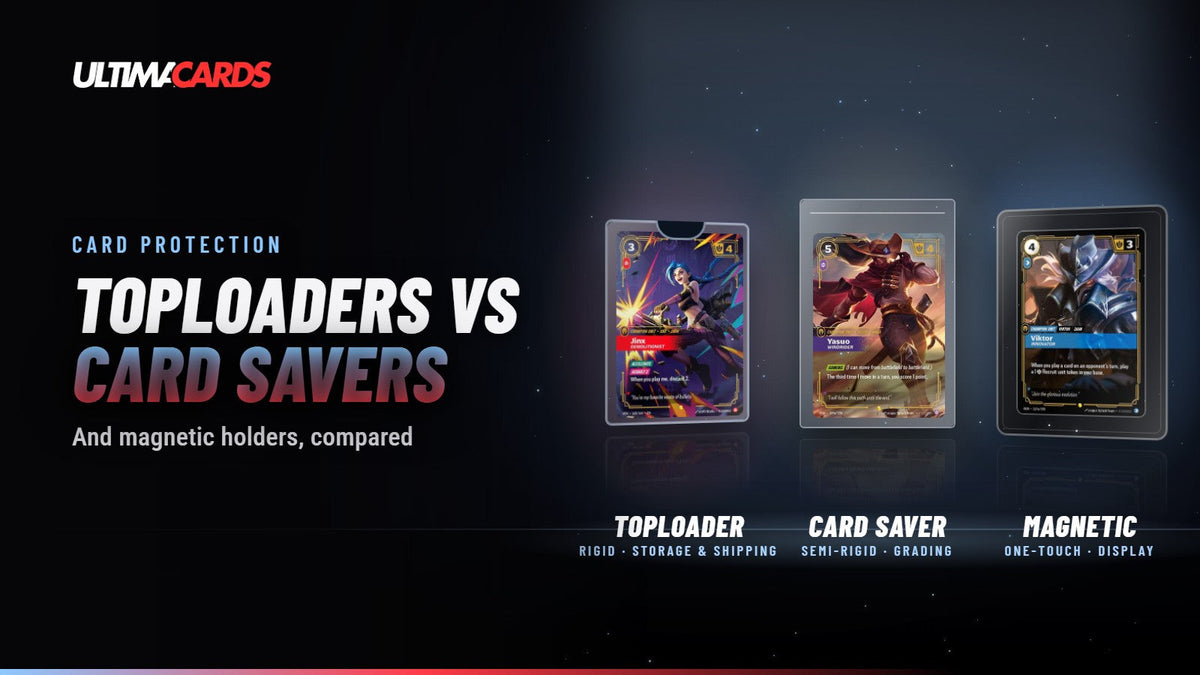
Toploader vs card saver is the most common protection question in the hobby, and the third option, the magnetic one-touch holder, makes it more confusing. All three hold a single card. They're built for different jobs: everyday storage and shipping, grading submissions, and display. This guide explains what each one is, what the "pt" sizes mean, which holder graders require, and a simple system for protecting everything from bulk to your best pull.
Toploader vs card saver vs magnetic holder at a glance
| Toploader | Card saver | Magnetic holder | |
|---|---|---|---|
| Material | Rigid plastic | Flexible, semi-rigid plastic | Thick, rigid two-piece plastic |
| Closure | Open top | Open top with a wide lip | Magnetic snap, fully enclosed |
| Best for | Storage and shipping | Grading submissions | Display and long-term storage of key cards |
| Strength | Stops bends | Easy to remove cards safely | Best protection and presentation |
| Weakness | Cards can slide out; tight removal risks edges | Less bend protection | Bulkier and more expensive |
| Cost per card | Low | Low | Higher |
Always start with a penny sleeve
Whatever holder you use, put the card in a penny sleeve first (a thin, soft, clear sleeve). It protects the surface from scratches as the card slides in and out of rigid plastic, and it keeps dust off.
Yu-Gi-Oh! cards are smaller than standard (about 59 × 86 mm vs. 63 × 88 mm), so they sit loosely in standard holders. Put them in a small perfect-fit sleeve first, then a standard penny sleeve, so they don't slide around. Riftbound cards are standard size and fit standard holders directly. See our Yu-Gi-Oh! sleeves guide and Riftbound sleeves guide for sizes.
What do "35pt", "55pt" and "130pt" mean?
The pt (point) rating is the thickness of card the holder is made for, in thousandths of an inch: a 35pt holder fits a card up to 0.035" thick.
- 35pt fits a standard trading card in a penny sleeve. It's the size most TCG players need.
- Higher pt sizes are for thick cards, such as memorabilia or extra-thick promos. Using one for a normal card leaves it loose.
Match the holder to the card. Too tight bends the card and wears its edges on the way in and out; too loose lets it slide and rub.
Toploaders: the everyday workhorse
A toploader is a rigid, open-top sleeve, usually 3" × 4" for standard cards. It's the default for:
- Storing valuable singles in a box or binder pocket
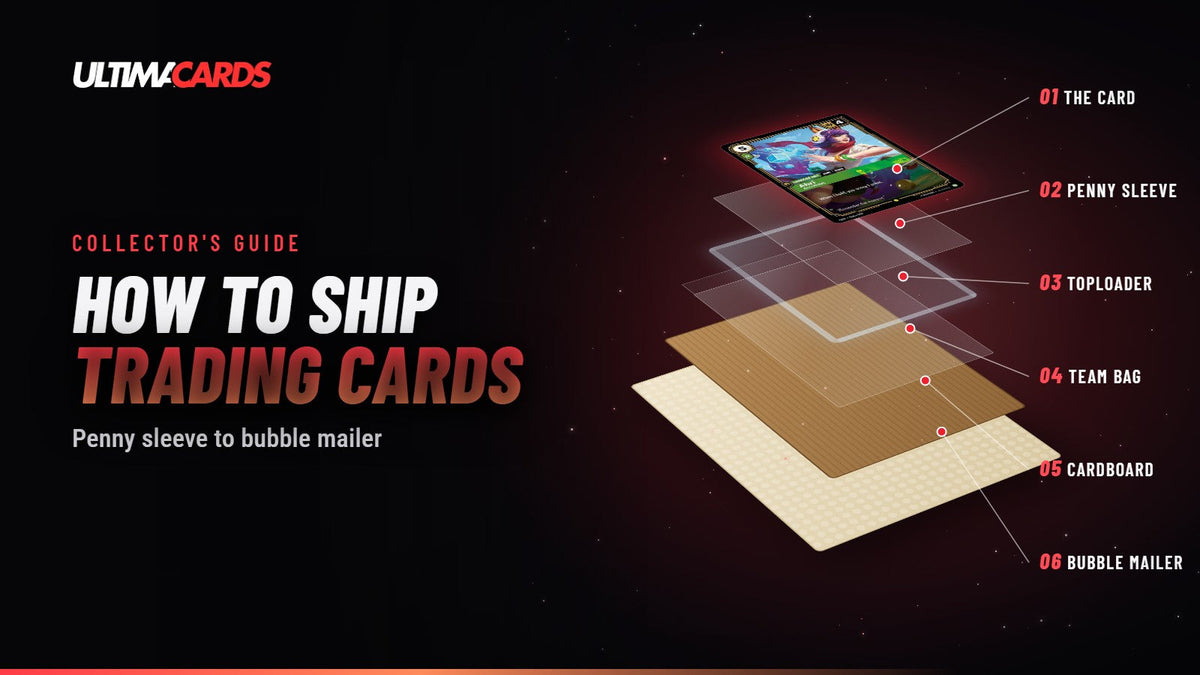
- Shipping cards (inside a team bag, between cardboard). See our guide to shipping trading cards.
- Trading at events, so cards can be passed around safely
Tips: seal toploaders in a resealable team bag so cards can't slide out, store them upright rather than stacked under weight, and never force two cards into one.
Card savers: what grading companies want
A card saver (semi-rigid holder) is softer than a toploader and has a wide lip at the opening, which makes it easy for a grader to pull the card out without touching the edges.
That's why grading companies prefer them. PSA asks for each card in a penny sleeve, then a semi-rigid holder measuring 3 5/16" × 4 7/8", and specifically says not to use toploaders. Other graders have their own rules, so check before you submit.
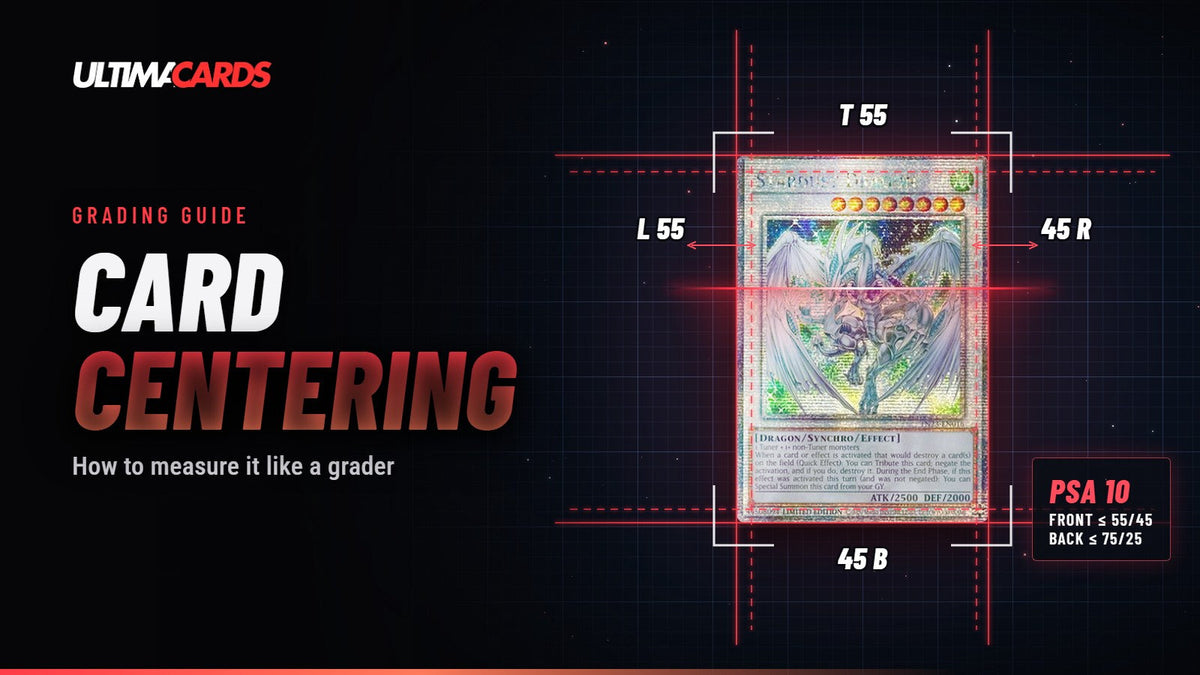
Card savers bend more easily than toploaders, so for storage and shipping on their own, a toploader is the stronger choice. Learn more in our grading guides for Yu-Gi-Oh! and Riftbound, and check your card's centering before you send it.
Magnetic one-touch holders: for display
A magnetic holder (often called a one-touch) is two thick pieces of clear plastic that snap together with magnets around a recessed card slot. Many have a coloured or frosted border, and some include UV protection to reduce fading.
They're the best choice for:
- Displaying your favourite cards on a shelf or stand
- Long-term storage of chase cards you won't be moving often
- Gifts, where presentation matters
Tips: pick the right pt size, make sure the card sits flat before closing, and close the holder gently rather than snapping it shut on a card that isn't seated.
Screw-down holders and other options
- Screw-down holders look solid, but over-tightening can dent or warp a card. Graders don't accept them. Magnetic holders have largely replaced them.
- Binders with side-loading pockets are great for playable cards and sets. Choose PVC-free pages. Browse binders.
- Graded slabs need their own protection: a slab sleeve or a GradedGuard case.
A simple protection system for your whole collection
| What you have | Protection |
|---|---|
| Bulk Commons | Storage boxes, sorted by set |
| Playable cards | Deck sleeves, or a side-loading binder |
| Valuable singles | Penny sleeve → toploader → team bag |
| Cards going to a grader | Penny sleeve → card saver, per the grader's rules |
| Your chase cards on display | Penny sleeve (if it fits) → magnetic holder with UV protection |
| Graded slabs | Slab sleeve or a protective case |
Wherever they live, keep cards cool, dry and out of direct sunlight. Humidity curls foils, and sunlight fades ink, even through clear plastic.
Frequently asked questions
What's the difference between a toploader and a card saver?
A toploader is rigid and best for storage and shipping. A card saver is semi-rigid, with a wide lip that makes cards easy to remove, which is why grading companies prefer it for submissions.
Can I send cards to PSA in toploaders?
No. PSA asks for each card in a penny sleeve, then a semi-rigid holder (3 5/16" × 4 7/8"), and says not to use toploaders. Check PSA's current shipping guide before submitting.
Are magnetic holders better than toploaders?
For display and long-term protection of key cards, yes. For everyday storage, shipping and trading, toploaders are cheaper and more practical.
What size toploader do I need?
35pt fits a standard trading card in a penny sleeve. Choose a higher pt size only for thicker cards.
Do Yu-Gi-Oh! cards fit in standard toploaders?
They fit, but loosely, because Yu-Gi-Oh! cards are smaller than standard. Put them in a small perfect-fit sleeve and then a standard penny sleeve first so they don't slide.

Leave a comment
This site is protected by hCaptcha and the hCaptcha Privacy Policy and Terms of Service apply.